Melbourne Building Costs, Line by Line
Every line item on a Melbourne building contract, explained. Base build, site costs, provisional sums, statutory levies, connections, PCI and handover. What each line is, where it moves, and how to price-check it.

Know the Melbourne numbers? Find a builder in 60 seconds
Tell us your build type and budget and we'll match you with vetted Victorian builders that fit your block and brief.
Free · no obligation · builders contact you, never the other way around.
Latest read (June 2026): Victoria's official ABS average is $1,914/m² ($485,292 for a completed home, 2024-25). Melbourne construction costs rose +0.9% in the June 2026 quarter (Cordell/Cotality), and nationally new-dwelling prices are up 5.8% over the year, so forward budgets should sit above the older completion average.
Regulator
VBA
Victorian Building Authority
Contracts
CAV
Consumer Affairs Victoria
Growth levy
GAIC
where applicable
Insurance
DBI
above state threshold
Base build (contract sum)
The base build is the headline figure a Melbourne builder quotes: the home design at standard inclusions, sitting on a standard slab, on a level standard block. It is the number in the advertisement. It is almost never the number you actually pay.
What "standard inclusions" means varies enormously between builders. Ask any Melbourne builder for their standard inclusions list in writing - a responsible builder will hand you a multi-page document, a bad one will hand-wave. Compare inclusions before comparing prices.
Site costs
Site costs are the works needed to make a specific block build-ready: extra footings or groundwork on reactive clay, retaining walls where the block slopes, cut-and-fill on uneven blocks, temporary fencing, waste removal. In Melbourne's growth corridors, reactive clay often means a more heavily engineered slab, which can add thousands of dollars, so your soil test and engineer confirm what your block actually needs.
Site costs are almost always quoted as PROVISIONAL at tender. The final number is set once a soil test, contour survey and connection quotes are in hand. Ask your builder to show you the provisional cap on their contract, what would push it above cap, and how they reconcile.
Provisional sums (PC items)
A provisional sum is an allowance for a specific item where the exact spec is not yet known - typically tiling, taps, appliance selections, floor coverings. The builder allows a dollar amount; you pick the specific product; the difference is reconciled at construction stage.
The trap: some builders allow provisional sums that are unrealistically low, so the base build looks cheap. Reconciliation then pushes the final invoice up. Compare the PC allowances across builders on your shortlist, not just the base build.
Statutory levies (Melbourne-specific)
Victoria has statutory levies that do not exist in every state. The three most commonly relevant to a Melbourne buyer: the Growth Areas Infrastructure Contribution (GAIC) on qualifying land in growth areas; a Section 173 agreement fee where the developer has attached one to the parent title; the foreign purchaser additional duty for non-resident buyers.
Each of these is administered by the State Revenue Office, and each is capped or triggered on specific conditions - your conveyancer will confirm which apply to your specific parcel before you sign.
Connections and utilities
Every new Melbourne home needs power, water, sewer, stormwater and NBN connections. In greenfield estates these are usually pre-run to the lot boundary; the cost is the drop from boundary to home. In infill (KDR) blocks the connections may need to be replaced entirely - an easy way to add tens of thousands to the total.
Ask your builder for a written connection allowance and confirm with a Melbourne services locator like Before You Dig Australia what is actually at your boundary.
$1,914/m²
≈ $485,292 avg completed home
ABS Building Activity 2024–25
$2,700 – $6,900/m²
base build, excl. land & GST
RLB Q4 2025 — Melbourne, custom (excl. GST)
The ABS figure is the official average of completed homes (contracts signed 12–24 months ago, all build types). New 2026 contracts — especially custom builds — sit higher, which is the market range.
Figures last verified June 2026.
Cost to build a house in Melbourne by build tier (2026)
Quick answer
For a standard 200 m² home in Melbourne, base build runs from about $380,000 for a budget volume home to $1.04M+ for a high-end custom build, roughly $1,900 to $5,200+ per square metre, excluding land. The official ABS average for Victoria is $1,914/m².
| Build tier | Cost per m² | Est. total build (200 m² home) |
|---|---|---|
| Budget / Basic – Volume project home | $1,900 - $2,700 | $380,000 - $540,000 |
| Mid-Range – Upgraded finishes | $2,700 - $3,600 | $540,000 - $720,000 |
| High-End / Custom – Bespoke design | $3,600 - $5,200 | $720,000 - $1.04M |
| Luxury – Architectural design | $5,200 - $6,900+ | $1.04M - $1.38M+ |
Victoria also carries GAIC in growth areas and 7-star NatHERS requirements. These are base-build ranges. Add roughly 25–45% for land, site works (slope, soil, retaining), professional fees and GST to reach a total project budget. Always treat a builder’s fixed-price contract as final — per-m² rates are for planning only.
Sources: ABS Building Activity, Australia (2024–25); Rider Levett Bucknall (RLB) Q4 2025 construction cost report; Housing Industry Association (HIA); Master Builders Australia.
Cost to build in Melbourne by home size (2026)
Quick answer
A new home in Melbourne typically costs $485,000 - $650,000 for a 3-bedroom, $650,000 - $865,000 for a 4-bedroom and $810,000 - $1.08M for a 5-bedroom (base build, excl. land).
| Build tier | Cost per m² | Est. total build |
|---|---|---|
| 3-bedroom – ~180 m² | — | $485,000 - $650,000 |
| 4-bedroom – ~240 m² | — | $650,000 - $865,000 |
| 5-bedroom – ~300 m² | — | $810,000 - $1.08M |
At a mid-range rate of $2,700–$3,600/m² (base build, excl. land). These are base-build ranges. Add roughly 25–45% for land, site works (slope, soil, retaining), professional fees and GST to reach a total project budget. Always treat a builder’s fixed-price contract as final — per-m² rates are for planning only.
Sources: ABS Building Activity, Australia (2024–25); Rider Levett Bucknall (RLB) Q4 2025 construction cost report.
Official Victorian sources referenced
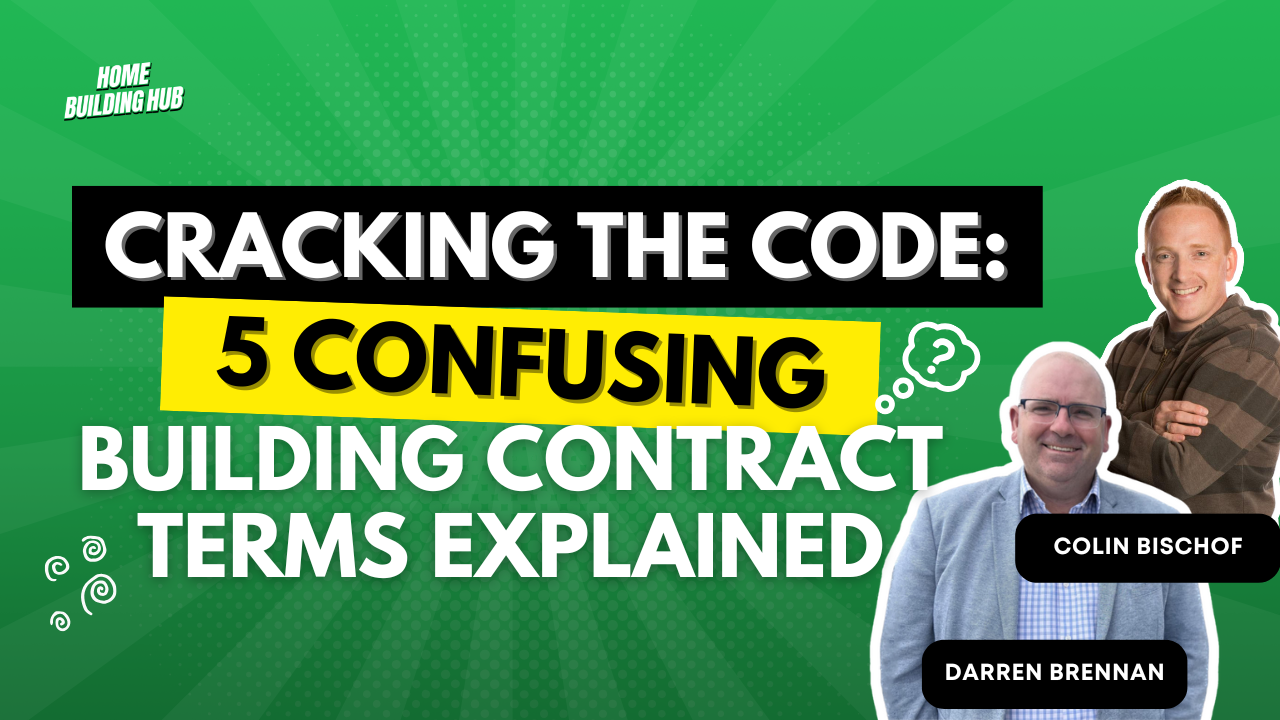

Building contracts can be full of hidden traps and confusing jargon. In this episode, we break down the five clauses that trip up most homeowners - covering prime costs, provisional sums, payment schedules, special conditions, build time frames and utility connections.
Watch full episodeFrequently asked
What is included in "base build" in Melbourne?+
The specific design at the builder's standard inclusions on a standard slab on a level standard block. It excludes site costs, provisional sums, statutory levies, connections and any spec upgrades. Always request the "standard inclusions" list before comparing base builds.
How much do site costs usually add in Melbourne?+
Site costs commonly land in the mid-five figures for a standard block in a Melbourne growth corridor, and much higher on slope, reactive clay or narrow-frontage lots. Because they are provisional, any builder promising a "fixed site cost" without a soil test is misleading.
Is GAIC always payable in a growth corridor?+
Not always. GAIC applies to certain parcels in growth areas when first developed or subdivided. The parent title's history determines whether the levy has already been paid or is still triggered. Your conveyancer will run a state check on the parcel.
How do I compare Melbourne builder quotes fairly?+
Line up base build, site cost cap, PC allowances (tile, taps, appliances, flooring), statutory levy allowance, connections, and any inclusions that need upgrading to match. If a builder will not itemise on paper, they are not comparable.
Where does BuildPilot get Melbourne cost figures?+
Live H&L feed for headline pricing, State Revenue Office for statutory figures, VBA for regulatory context, and partner builders for actual line-item pricing. All external, all cited on the page.
By where you are in the journey
Every question, answered
Grouped by stage so you can jump to what matters right now - from big-picture research through comparing quotes to reading the fine print before you sign.
Your next steps
What to do next
See our 2026 Melbourne Cost Report
Deep-dive numbers by suburb, m² and inclusions.
Open guideCompare Melbourne builder types
Volume vs project vs custom - where the cost differences live.
Open guideChoose your Melbourne builder
Verify VBA + DBI before signing anything.
Open guideNote: the stories below are Adelaide-based clients - the underlying builder-matching process is identical for Melbourne buyers.
How BuildPilot handles build cost - real client stories
C. Foster
When pre-construction stalls on selections and design, the right builder change can rescue the entire project.
Read the case studyAnyek Residence
Support that continued through every stage of the build, including a builder liquidation mid-construction.
Read the case studyBuilding in Adelaide instead?
See Adelaide build cost reportBuild Choices
The choices that move your Melbourne budget
The build decisions behind these numbers, explained in plain English for Victoria.
Compare the options
The material and system choices that move your Melbourne build budget most, weighed up in plain English for Victoria.
Sources
Last verified June 2026- State Revenue Office Victoria link
- Consumer Affairs Victoria - Building contracts link
- Victorian Building Authority link
- Before You Dig Australia (1100) link
Cost ranges are planning estimates cross-checked against the sources above, not quotes. Prices move with materials, labour, site conditions and council rules. Always confirm against a written, fixed-price quote for your own block.