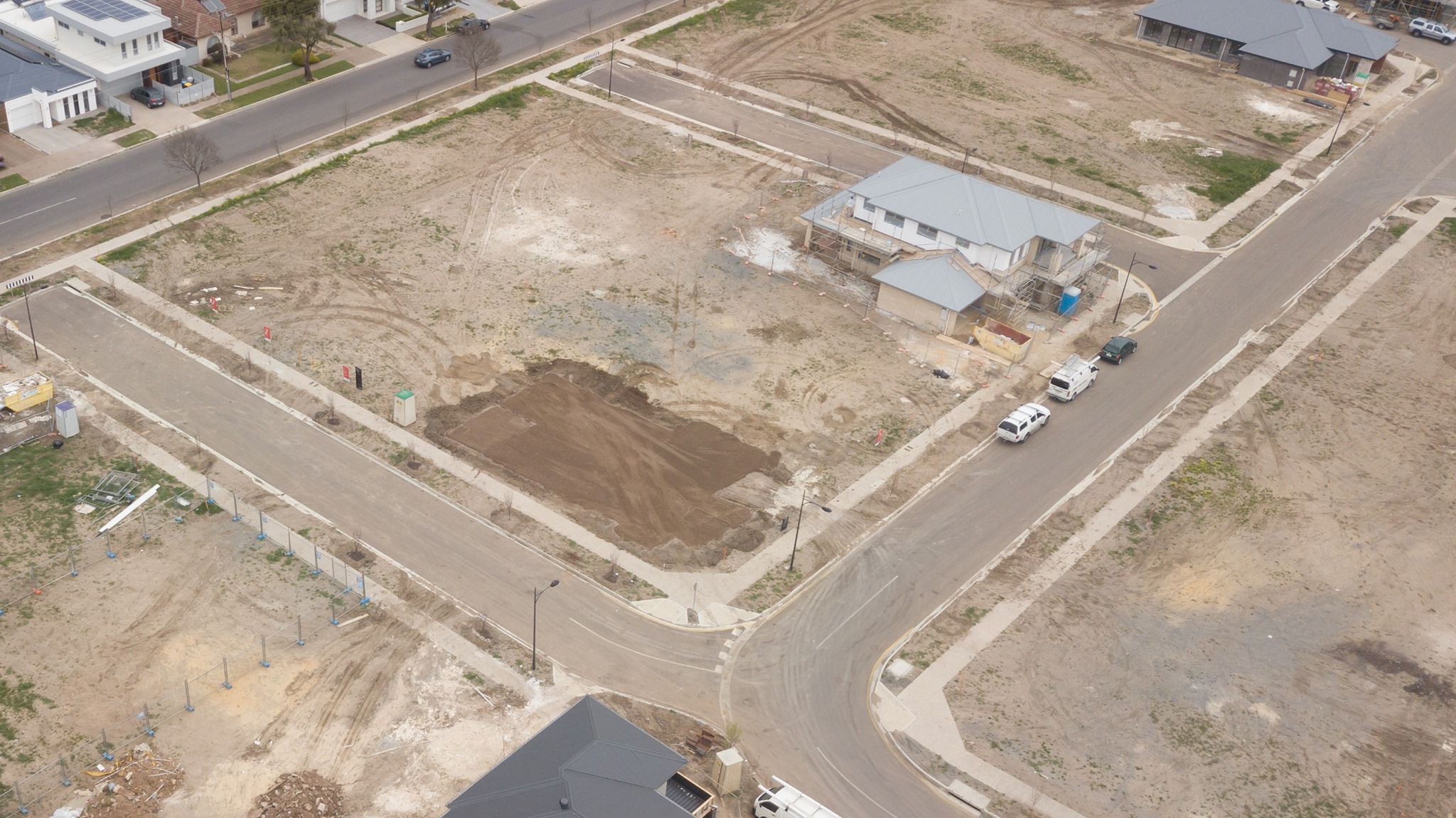
Section 173 of the Planning and Environment Act 1987 lets a Victorian council register a binding agreement on the title of a block. That agreement stays with the land forever - not just for you, but for every future owner. If you are buying in a Melbourne growth-corridor estate (Wyndham, Casey, Melton, Mitchell, Whittlesea, Hume, Cardinia), your block almost certainly has one. Here is what it actually restricts.
What Section 173 agreements typically cover
- Minimum home value. Common: 'the dwelling must have a construction contract value of no less than $X'. Prevents flimsy investor builds dragging down the estate.
- Facade materials palette. Common: 'front facade must be predominantly brick, render, or approved cladding'. Blocks weatherboard-front designs.
- Roof pitch + colour. Common: '22 to 27 degree pitch, Colorbond in an approved colour range'. Blocks flat roofs and light-coloured tiles.
- Driveway width + material. Common: '3 to 4 metres wide, concrete or exposed aggregate'. Blocks two-lane driveways and gravel driveways.
- Fencing. Common: '1.8 m Colorbond in an approved colour, side and rear only, no front fence'.
- Landscaping completion. Common: 'front landscaping must be completed within 6 or 12 months of Occupancy Permit'. Failure triggers council enforcement or developer bond retention.
- Vehicle storage. Common: 'no caravans, boats or trailers visible from the street'. Enforcement varies by estate.
Why every growth-corridor buyer signs one
Developers use Section 173 agreements to lock in an estate character - ensuring the neighbours 5 blocks over cannot build something that drags down everyone's resale value. The trade-off is you accept design controls that would normally require a planning permit. Most buyers find the controls reasonable - the problem is buyers who do not read them and then discover they cannot build the two-storey design they wanted, or paint their fence the colour they wanted.
How to actually read your Section 173
- Ask your conveyancer for a copy of the Section 173 agreement BEFORE you sign the land contract. It should be attached to the section 32 vendor statement.
- Read every restriction. Not just the summary - the actual clauses.
- Cross-check your builder's proposed design against every clause. If it does not comply, either change the design or negotiate a variation with the developer / council (which is difficult and slow).
- Ask specifically about the landscaping completion clause. Failing this clause routinely triggers a $2k-$8k developer bond retention.
How long a Section 173 lasts
Some agreements sunset after 5-10 years. Many run in perpetuity. Read the clause specifically labelled 'duration' or 'termination'. Even sunset clauses often carry exceptions for major clauses like minimum home value.
Where BuildPilot fits
We are not a conveyancer or town planner. Our Melbourne growth-corridor comparison covers the differences between the three most common Section 173 councils. Our Hume council guide covers Section 173 patterns in the fastest-growing corridor. Always get your conveyancer to read the Section 173 line by line.