First Home Buyer Adelaide
The Complete Guide to Building Your First Home
Everything you need to know - HomeBuilder grant, First Home Owner Grant, stamp duty concessions, real costs, construction loans, where to build, and how to avoid the mistakes that cost first home buyers thousands. Independent advice, no sales pitch.
Get matched with the right builder for your build
A 3-minute questionnaire on budget, block type and build style. We shortlist Adelaide partner builders that fit, and hand you a comparison table. No pushy calls, no commitment.
- Under 3 minutes. 8 quick questions, no email required to see results.
- Ranked shortlist. Match score, price band, and where each builder actually builds.
- Independent. Editorial layer over paid ranking. Builders can't buy their way to the top.

By George Giannakakis · B.Arch.Studies · M.Arch (UniSA) · RLA300580
Last reviewed: · How we research
Grants & Savings for First Home Buyers in SA
South Australia has some of the most generous first home buyer incentives in the country. These are the grants and saving available to you right now:
First Home Owner Grant (FHOG)
$15,000A one-off $15,000 grant for first home buyers building or buying a new home in South Australia. Since June 2024, there is no property value cap. You must live in the home for at least 6 months.
RevenueSA - FHOGStamp Duty Exemption
Up to $21,330 savedFirst home buyers pay zero stamp duty on new homes valued up to $650,000. For homes between $650,000 and $700,000, a partial concession applies. This can save you over $21,000 in upfront costs.
RevenueSA - Stamp DutyAustralian Government 5% Deposit Scheme
5% deposit (no LMI)Formerly the First Home Guarantee. Renamed and expanded from 1 October 2025: eligible first home buyers can buy with as little as 5% deposit and no Lenders Mortgage Insurance (LMI). Single parents and eligible legal guardians can use a 2% deposit. Income caps were removed and places are now unlimited from 1 October 2025. Property price caps apply by region - confirm the current Adelaide cap with your lender before relying on a specific figure.
Housing Australia - 5% Deposit SchemeFirst Home Super Saver Scheme (FHSSS)
Up to $50,000 from superWithdraw voluntary super contributions (up to $50,000) for a first home deposit. Contributions are taxed at 15% going in, which is typically lower than your marginal tax rate. Requires advance planning as you need to have made voluntary contributions before applying.
ATO - FHSSSExample: Total Savings on a $550,000 First Home Build
Based on an eligible first home buyer building a $550,000 home in SA with a 5% deposit under the Australian Government 5% Deposit Scheme. Actual savings depend on individual circumstances.
How Much Does It Actually Cost?
The advertised price of a house and land package is the starting point, not the finish line. This is what a realistic first home budget looks like in Adelaide:
| Cost Item | Typical Range | |
|---|---|---|
| Land (growth suburb) | $170,000 - $350,000 | |
| Construction (3-4 bed home) | $280,000 - $450,000 | |
| Site costs | $10,000 - $50,000+ | |
| Essential upgrades | $15,000 - $40,000 | |
| Landscaping & fencing | $10,000 - $30,000 | |
| Council & connection fees | $3,000 - $8,000 | |
| Legal & conveyancing | $1,500 - $3,000 | |
| Realistic Total Budget | $650,000 - $850,000+ | |
Budget tip: Always hold 10-15% above your builder quote for site costs, variations, and unexpected expenses. A $450,000 build should have a $500,000+ total budget.
Construction Loans Explained
Building a home uses a different loan structure to buying an existing property. This is how construction loans work:
Progressive drawdowns
Money is released in stages as your home is built - typically at slab, frame, lock-up, fit-out, and completion. You only pay interest on the amount drawn down, not the full loan.
Interest-only during construction
During the build (8-14 months), you pay interest only on the drawn amount. Once complete, the loan converts to a standard principal and interest home loan.
Separate land and construction
If buying land separately, you may need a land loan first (with principal and interest repayments), then a construction loan when building starts. Some lenders combine these.
Fixed vs variable during build
Most construction loans are variable rate during the build. You can often fix the rate once the loan converts to a standard mortgage after completion.
Builder progress payments
Your builder invoices at each stage. The bank sends a valuer to confirm the work before releasing the next payment. This protects you from paying ahead of progress.
Pro tip: Use a mortgage broker who specialises in construction lending. They understand the nuances of progress payments, builder requirements, and can often access better rates than going directly to a bank. Their service is free to you.
All Australian mortgage and finance brokers operate under an Australian Credit Licence or AFSL. Look any broker up on the ASIC register before signing an authority.
Get a construction-loan specialist on your side.
Equable, BuildPilot's exclusive construction-finance partner, focuses only on building loans. They'll map FHOG, stamp-duty exemption and 5% Deposit Scheme eligibility specific to the build path you're considering, so you know exactly where you stand before signing land or builder contracts.
Best Suburbs for First Home Buyers
These Adelaide suburbs offer the best combination of affordability, growth potential, and lifestyle for first home buyers:
| Area | Market Position |
|---|---|
| Two Wells / Virginia | Entry-level area |
| Munno Para / Andrews Farm | Entry-level area |
| Angle Vale / Eyre | Affordable growth area |
| Seaford / Moana | Coastal lifestyle |
| Aldinga / Sellicks | Affordable south |
| Mount Barker | Hills lifestyle |
| Gawler / Hewett | Affordable north-east |
Entry-level house and land packages in Adelaide currently start from around $650,000 in the most affordable growth areas. All areas shown qualify for the $15,000 FHOG and stamp duty exemption (under $650K).
For detailed guides on each area, see our Northern Suburbs or complete House and Land guide. Planning to visit display homes? Take our free checklist with you.
Your Step-by-Step Building Journey
Building your first home is a 7-step process. This is what each stage involves and how long it takes:
Get Your Finances Sorted
Check your borrowing capacity. Save your deposit (or investigate the FHSSS). Get pre-approval from a lender or mortgage broker. Understand your total budget including all costs beyond the build price.
Research Locations & Visit Display Homes
Explore suburbs that fit your budget and lifestyle. Visit display homes to calibrate expectations. Use our display home checklist to compare builders properly.
Find the Right Builder
Compare 3-5 builders on the same criteria. Get detailed quotes with the same inclusions. Check reviews, visit completed homes, and ask for references.
Secure Your Land
Purchase land or lock in a house and land package. Get a soil test before committing. Check land registration timelines - some estates have 6-12 month waits.
Review & Sign Building Contract
Have the contract reviewed by a solicitor or BuildPilot One on One Support. Understand site costs, PC allowances, completion dates, and what happens if you want changes.
Apply for Grants & Finance
Lodge your FHOG through your lender or RevenueSA. Apply for the Australian Government 5% Deposit Scheme through a participating lender if eligible. Convert your pre-approval to formal approval.
Build & Move In
Monitor progress at key stages (slab, frame, lock-up, fix, completion). Arrange independent inspections. Complete your handover checklist and enjoy your new home.
Mistakes That Cost First Home Buyers Thousands
These are the patterns we see most often. Being aware of them puts you in a much stronger position:
Not budgeting beyond the headline price
The advertised package price is the starting point. Site costs, upgrades, landscaping, fencing, window coverings, and connection fees add $30,000-$80,000+ to the final cost. Always work with a total budget, not the base price.
Skipping the soil test
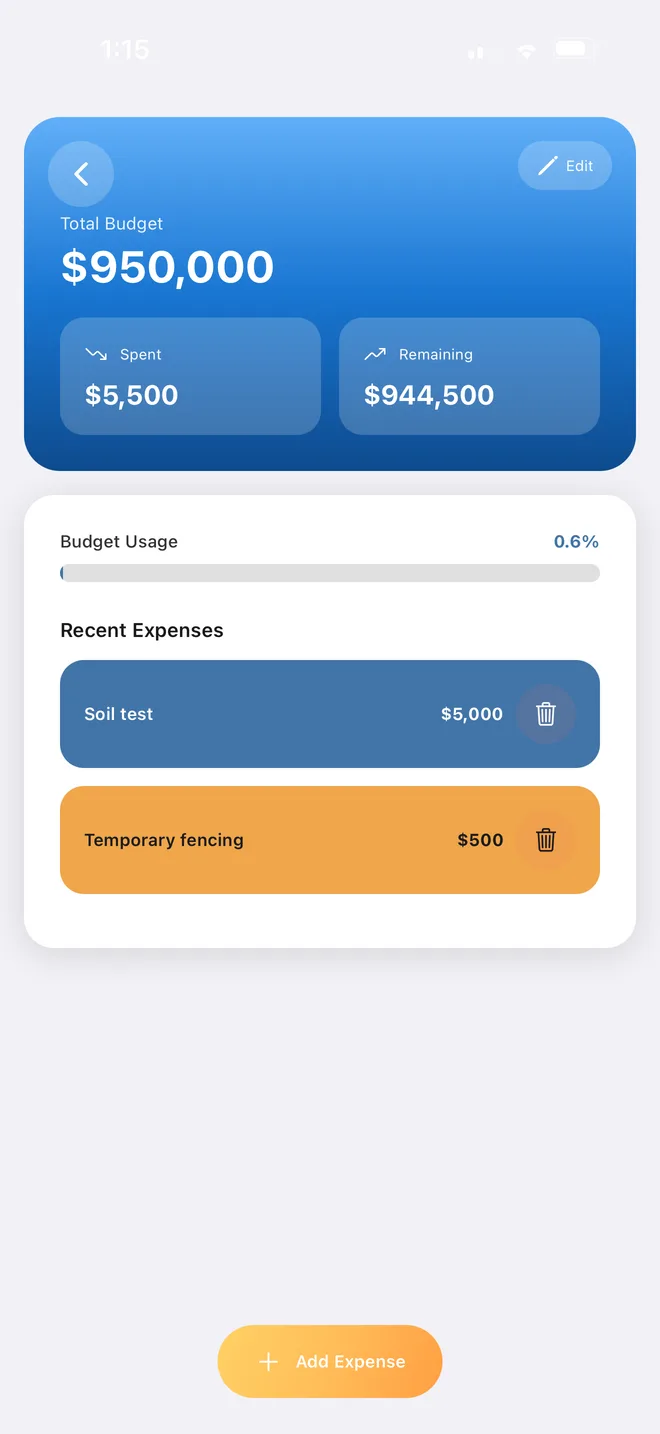
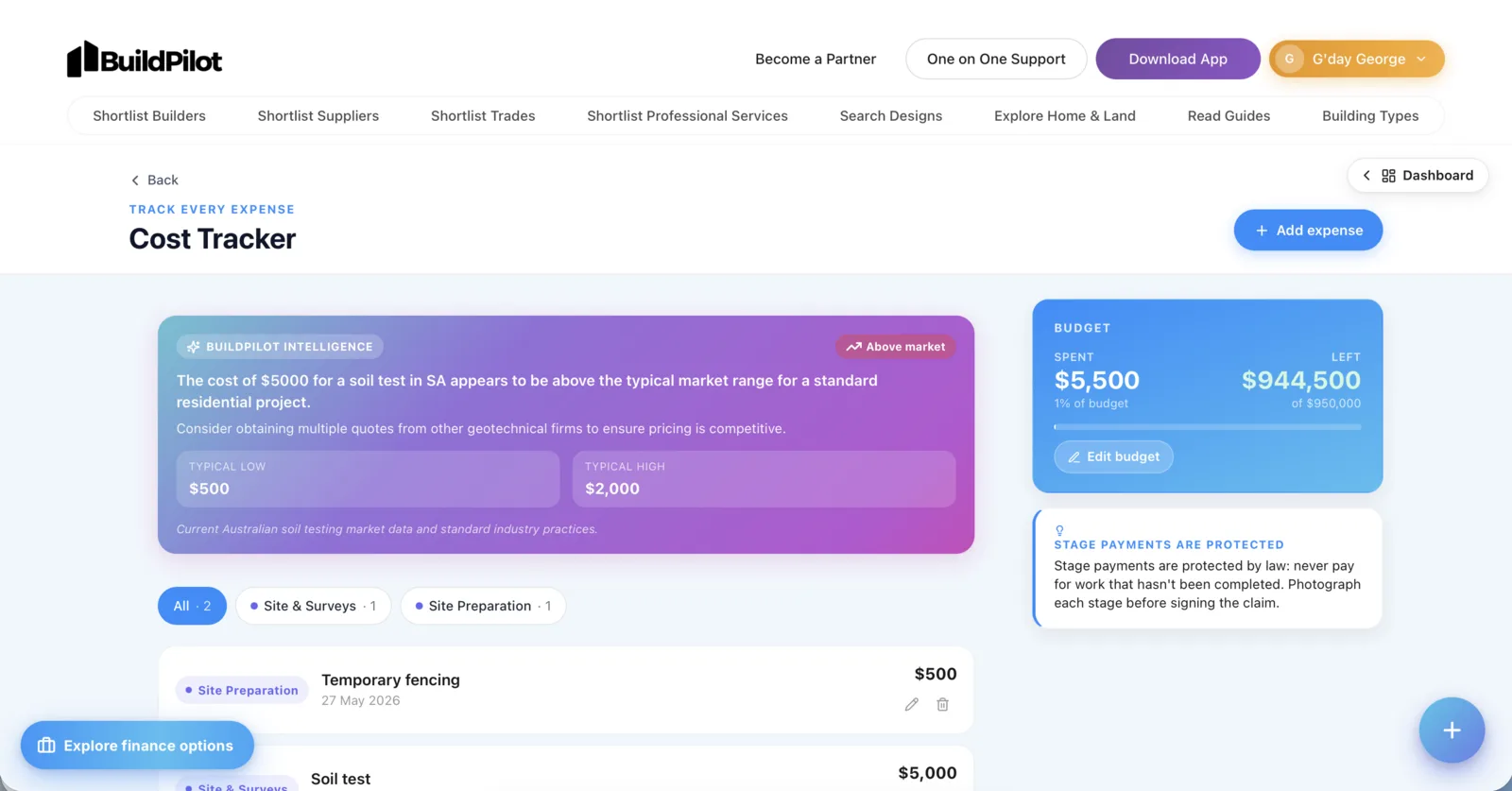
A $500 soil test before buying land can save you $20,000+ in unexpected site costs. Reactive soil, rock, or fill can dramatically increase your foundation costs. Never skip this step.
Choosing a builder based on price alone
The cheapest quote often excludes items other builders include as standard. Compare total costs with the same inclusions. A slightly more expensive builder with better inclusions can actually be cheaper overall.
Not understanding what is standard vs upgraded
Display homes include $80,000-$150,000 in upgrades. The base specification is significantly different. Ask for the standard inclusions list and compare it to what you see in the display before getting excited about a price.
Forgetting about ongoing costs
Beyond the build, factor in council rates, water, electricity, internet, home and contents insurance, and maintenance. A larger home in a premium area costs more to run. Make sure your budget covers the first year of living costs too.
Not applying for all available grants
Many first home buyers miss out on the FHSSS (withdrawing super contributions) or fail to time their FHOG application correctly. Research every grant you qualify for before signing anything.
Choosing the Right Builder as a First Home Buyer
The builder you choose has a bigger impact on your experience than almost any other decision. Focus on these things as a first home buyer:
Clear, transparent pricing
Look for builders who include more in their base price rather than those with a low headline figure and expensive upgrades.
Good communication record
Read reviews focusing on communication, not just the finished product. First-timers need a builder who explains things clearly.
Experience with first home buyers
Some builders specialise in first homes and understand your budget constraints. They know how to maximise value within a tight budget.
Reasonable site cost handling
Ask how each builder handles site cost variations. Some absorb minor overruns; others pass every dollar on to you.
Browse Designs From Our Partnered Builders

Metricon SA
197 designs

Format Homes
135 designs

Fairmont Homes
103 designs

Rossdale
100 designs

HPG
59 designs

La Vida Homes WA
43 designs
Want help choosing a builder? BuildPilot matches first home buyers with partner builders suited to your budget and requirements. Browsing builders, designs and suburbs is free - for contract reviews, quote comparison and independent input throughout the build, see One on One Support.
Once you have a shortlist, check each builder's licence and ABN on the public registers before signing a contract or paying a deposit.
First Home Buyer FAQs
Most lenders require a 5-20% deposit. Under the Australian Government 5% Deposit Scheme (formerly the First Home Guarantee), eligible first home buyers can purchase with just 5% deposit and no Lenders Mortgage Insurance (LMI), and single parents/eligible legal guardians can use a 2% deposit. From 1 October 2025 the scheme runs with unlimited places and no income caps. For a $550,000 home, 5% means $27,500 of deposit. The $15,000 FHOG and FHSSS (up to $50,000 from super) can further reduce the cash you need upfront.
Related questions our members ask
Real first home buyer stories
Ochieng Residence
A first home buyer guided from land purchase through to a budget-friendly custom design in Morphett Vale.
Read the case studyFamily Extension Project
A staged renovation and extension in Gilles Plains, structured so the family could deliver parts of the home themselves.
Read the case studyReady to Start Your First Home Journey?
We specialise in helping first home buyers navigate the building process. Tell us your budget and what you are looking for, and we will match you with the right builder. Independent, no obligation.
Related Guides
House & Land Packages
Complete guide to H&L in Adelaide
First Home Guarantee Scheme
Federal 5% deposit, no LMI - fully sourced
SA First Home Owner Grant
$15,000 SA grant for new homes
First Home Super Saver Scheme
Use voluntary super for your deposit
HomeStart Finance
SA state-owned low-deposit lender
SA First Home Stamp Duty
RevenueSA stamp duty relief for new homes
Family Home Guarantee
2% deposit for eligible single parents
Display Homes Adelaide
Where to visit & what to look for
Display Home Checklist
Interactive tool for your visits
Home Builders Adelaide
How to choose the right builder
Sources & references
- [1]RevenueSA - First Home Owner Grant (South Australia)
- [2]RevenueSA - Stamp duty exemption and concession for first home buyers
- [3]Housing Australia - First Home Guarantee / 5% Deposit Scheme
- [4]Australian Taxation Office - First Home Super Saver Scheme (FHSSS)
- [5]Government of South Australia - HomeStart Finance
- [6]PlanSA - Building approvals & development applications
All government data verified against the listed primary sources at time of publication. Figures are reviewed at least quarterly.
Working out your total budget? Read our independent Adelaide Build Cost Report 2026 for per-sqm rates, site-cost ranges and the hidden line items most quotes leave out.
Disclaimer: This guide is for general information only. Grant amounts, eligibility criteria, and property value thresholds are subject to change by government policy. Verify current details with RevenueSA and Housing Australia. Cost estimates are indicative based on typical Adelaide projects as of February 2026. BuildPilot is an independent home-build CoPilot and is not a builder, developer, lender, or financial adviser. Seek professional advice before making financial decisions.
Live land across Adelaide
Here’s some live land available across Adelaide right now.

Mandorla, MUNNO PARA DOWNS
240m² block · MUNNO PARA DOWNS, 8m front

Mandorla, MUNNO PARA DOWNS
225m² block · MUNNO PARA DOWNS, 15m front

Southfields Rural Estate, RISDON PARK SOUTH
5003m² block · RISDON PARK SOUTH, 49m front
Advertised on behalf of the listing agents. BuildPilot is not the selling agent.
Your free workspace · House & Land Matchmaker
First home buyer? Tell us your block and budget and we surface the packages that fit.
No more scrolling through 200 packages that do not match your stamp duty band, your minimum bedrooms, or your preferred suburb. Brief us once and we narrow Adelaide inventory down to packages that actually suit your situation.
Free to use. No credit card. Cancel by closing the tab.
By where you are in the journey
Every question, answered
Grouped by stage so you can jump to what matters right now - from big-picture research through comparing quotes to reading the fine print before you sign.
Your next steps
What to do next
What first home buyers wish someone had shown them
How to read a floor plan
The first thing a builder checks is the overall dimensions against the block, then the wet areas. If the bathrooms, laundry and kitchen sit close together, the plumbing is short and cheap. If they are scattered to four corners, someone was drawing rooms, not a house.
Read the guideHow to read a builder's quote
The pro turns straight to the exclusions and the provisional sums. A short exclusions list and few provisional sums means the builder has done the homework on your block. A long list means the price is a starting point and the real number arrives as variations.
Read the guideInspect your own build, stage by stage
The pro looks at what is about to be covered up. Every stage buries the last one: the slab hides the plumbing, the plaster hides the frame, the tiles hide the waterproofing. Photograph everything the day before it disappears.
Read the guideYour next step
Where are you up to?
Tell us where you are and we will point you to the right next move. No account needed, we remember it on this device.
We use cookies to improve your experience. Cookies on. Learn more