HBCF in Adelaide? In South Australia It Is Building Indemnity Insurance
Lots of Adelaide homeowners search for "HBCF", but HBCF (Home Building Compensation Fund) is the New South Wales scheme. In South Australia the equivalent cover is Building Indemnity Insurance (BII), and it is legally required for most domestic building work over $20,000. This independent guide explains what BII protects, the current thresholds, and the single most important check to make before you pay a deposit.
Quick answer
There is no HBCF in South Australia - that is the NSW scheme. In SA the equivalent is Building Indemnity Insurance (BII). If your licensed builder dies, disappears or becomes insolvent mid-project, BII pays to complete or rectify the work, up to $250,000 per dwelling. It is legally required for most domestic building work over $20,000. Never pay a deposit without seeing the current certificate of insurance.
HBCF vs Building Indemnity Insurance: the state difference
Australia's builder-insolvency insurance schemes are state based and go by different names. New South Wales has the Home Building Compensation Fund (HBCF). Victoria has Domestic Building Insurance (DBI). South Australia has Building Indemnity Insurance (BII), governed by the Building Work Contractors Act 1995 (SA). They all do a similar job - protect the homeowner if the builder cannot finish or rectify the work - but they are separate schemes with different thresholds, caps and regulators. If you are building in Adelaide, BII is the one that applies to you.
The $20,000 threshold (updated 10 November 2025)
Building Indemnity Insurance is required for domestic building work that needs development approval where the contract price is over $20,000. This threshold was increased from the previous $12,000 on 10 November 2025. New home builds, knockdown rebuilds, extensions and major renovations are captured above the threshold. Below it, your recourse is the standard consumer protection framework through Consumer and Business Services SA (CBS).
What Building Indemnity Insurance pays
- Cost to complete the project with another builder
- Rectification of defective work performed by the original insolvent builder
- Up to $250,000 per dwelling (increased from $150,000 on 10 November 2025)
- Only where the builder dies, disappears or becomes insolvent
BII does NOT cover: cosmetic defects, delays, disputes over quality with a still-trading builder, work outside the original contract scope, or work performed under cost-plus arrangements. It is insolvency insurance, not a general workmanship warranty.
Verifying BII before you pay a deposit
Every licensed builder taking a job over the threshold in SA must arrange a Building Indemnity Insurance policy through a registered broker before work starts. Ask for the certificate of insurance BEFORE you pay any deposit. It should show the builder's name, the property address, the contract value and the policy details. Confirm it directly with the broker or the insurer (for example QBE or Assetinsure). If your builder resists producing the certificate, or the details don't match your contract, walk away and report to CBS.
Critical rule: No certificate = No deposit
If your Adelaide builder can't produce a current Building Indemnity Insurance certificate at the point you're about to pay a deposit, do NOT pay. A builder who arranges it "later" hasn't done their paperwork - a red flag for how they'll manage your build.
What to do if your builder fails
(1) Notify Consumer and Business Services SA and the insurer / broker as soon as you discover the builder has become insolvent, died or disappeared. (2) Freeze all further payments. (3) Secure the site - protect materials and prevent unauthorised access. (4) Engage a specialist SA building lawyer for the claim. (5) Get an independent inspector to document the current state of the build before any rectification. Keep every contract, certificate, invoice and piece of correspondence.
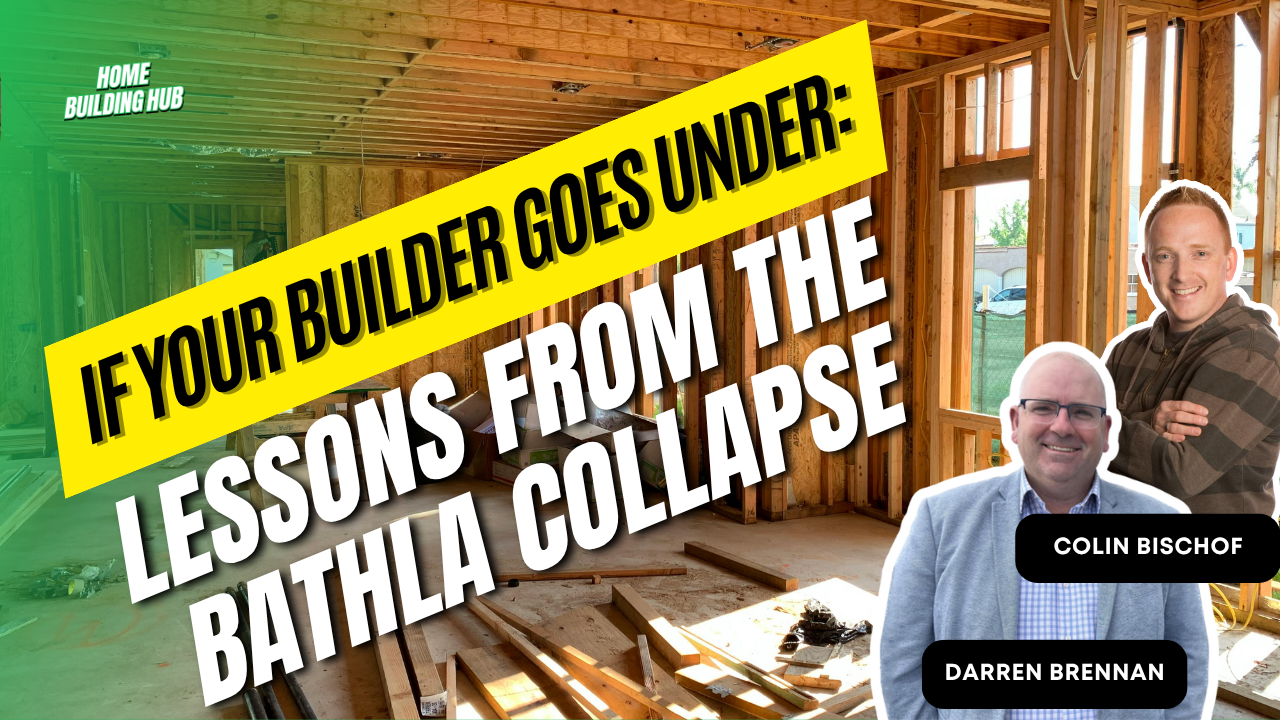

The collapse of Bathla Group has left thousands of buyers facing uncertainty and raises an important question for anyone building a home: what actually happens if your builder goes under? In this episode, we explain the critical differences between a developer collapse and a builder collapse, how Victoria's new Home Warranty scheme works, and the practical steps every homeowner can take to protect themselves.
Watch full episodeFrequently asked
Is there an HBCF in South Australia?+
No. HBCF (Home Building Compensation Fund) is the New South Wales scheme. In South Australia the equivalent statutory cover is Building Indemnity Insurance (BII), governed by the Building Work Contractors Act 1995 (SA). If you are building in Adelaide and searching for "HBCF", the scheme that actually applies to you is Building Indemnity Insurance.
What is Building Indemnity Insurance (BII) in SA?+
Building Indemnity Insurance is the South Australian statutory insurance that protects homeowners if their licensed builder dies, disappears or becomes insolvent before completing a domestic building project or rectifying defective work. The builder arranges and pays for it before work starts.
When does Building Indemnity Insurance apply?+
For domestic building work that requires development approval where the contract price is over $20,000. This threshold increased from $12,000 on 10 November 2025. It covers new home builds, knockdown rebuilds, major renovations and extensions where a licensed builder is engaged.
How much does BII cover?+
Up to $250,000 per dwelling as of 10 November 2025 (increased from the previous $150,000 cap), subject to the policy terms. It covers the cost to complete the project and to rectify defective work by the original builder if that builder dies, disappears or becomes insolvent.
Who pays for and arranges BII?+
The builder must arrange the policy through a registered insurance broker with an eligible insurer (for example QBE or Assetinsure) and pass the premium through the contract. Your builder must provide a valid certificate of insurance before you pay any deposit or work begins.
How do I verify my builder has BII before I pay a deposit?+
Ask for the certificate of insurance BEFORE you pay a deposit. It should name the builder, the property address, the contract value and the policy details. Confirm it directly with the broker or insurer. If your builder cannot produce a current certificate, do not pay, and report the matter to Consumer and Business Services SA (CBS).
Does BII cover me if the builder's work is defective?+
Only if the builder dies, disappears or becomes insolvent. For quality disputes with a still-trading builder, work through the contract dispute process, then Consumer and Business Services SA (CBS) and, if needed, SACAT (South Australian Civil and Administrative Tribunal). BII is insolvency insurance, not a general warranty.
Official sources
- sa.gov.au: Building Indemnity Insurance
- SAFA: Building Indemnity Insurance
- CBS SA: Building Indemnity Insurance
General information only, current as of the review date above. Building Indemnity Insurance thresholds, caps and insurer details are set by the SA Government and can change. Always confirm current requirements with CBS SA or SAFA, and engage a qualified SA-licensed conveyancer or building lawyer for specific advice.
Keep exploring
The full Adelaide home-builder market. Compare 30+ listed builders across volume, project and custom, and see how BuildPilot shortlists them.
The independent decision framework: match your project brief to the right builder type, then shortlist three to five that fit.
The 10-step pressure-test we run against any shortlisted builder: licence, insurance, references, contract clarity, inspection access.
How to verify a builder is licensed under the Building Work Contractors Act 1995 (SA), check their insurance and read references.
The conversation guide: what to ask in your first meeting, before signing, and at each stage from slab to handover.
We use cookies to improve your experience. Cookies on. Learn more