Hills Hoist

By George Giannakakis · B.Arch.Studies · M.Arch (UniSA) · RLA300580
Last reviewed: · How we research
"There is no room for a Hills Hoist on a 300m² block, and that is the whole story of Australian housing."
Regional note: Adelaide invention. National icon.
Hills Hoist explained in detail
The rotary clothesline. Invented in Adelaide by Lance Hill in 1945 and in almost every backyard by the 1960s. Now a heritage icon, a thing kids swing on, and increasingly a casualty of blocks under 400m². If your new estate has a covenant banning clotheslines visible from the street, this is what they mean.
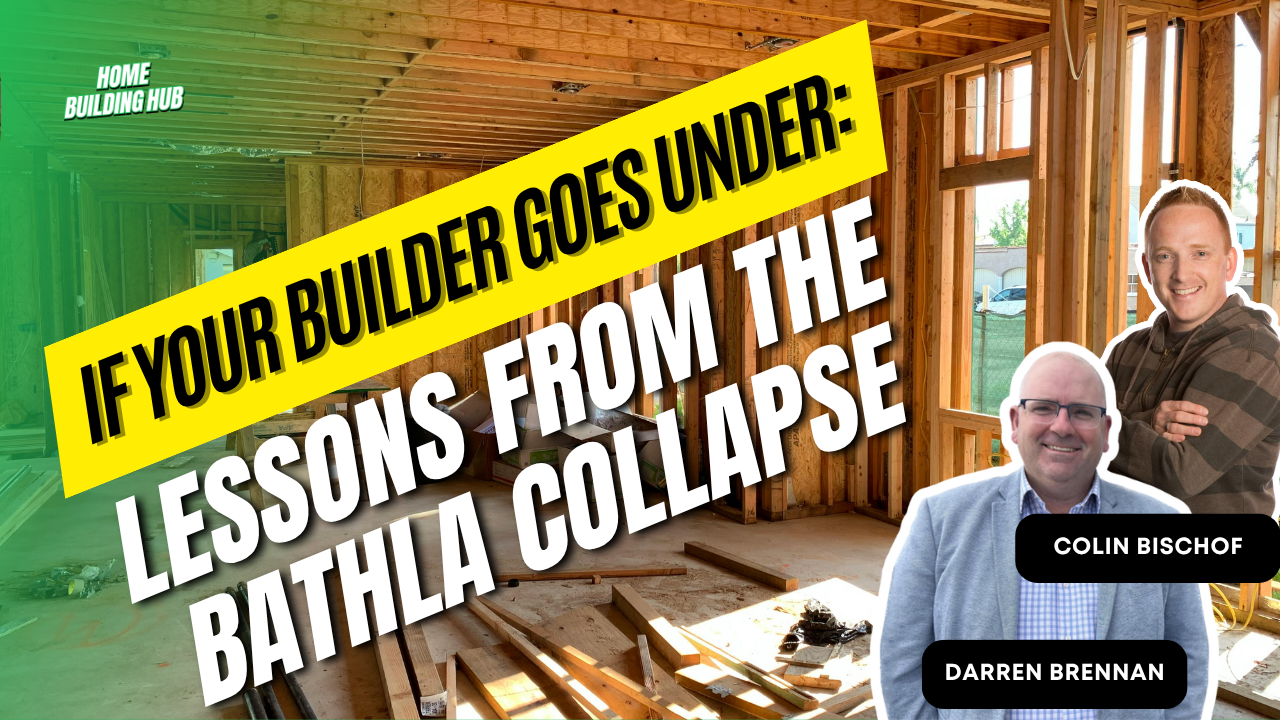

The collapse of Bathla Group has left thousands of buyers facing uncertainty and raises an important question for anyone building a home: what actually happens if your builder goes under? In this episode, we explain the critical differences between a developer collapse and a builder collapse, how Victoria's new Home Warranty scheme works, and the practical steps every homeowner can take to protect themselves.
Watch full episodeRelated Terms
More Terms in Tradie Slang
Verify against the binding rules in your state
BuildPilot is an independent Australian building platform, we publish guidance, we don't hold a building licence. Every Australian residential build must comply with the National Construction Code plus state-specific Acts and consumer-protection law. The authorities below are the primary sources of truth for the rules that actually apply to your project.
National
The primary national set of technical building standards that every Australian build must comply with. Volume 2 covers Class 1 & 10 buildings (most homes).
Specific material, product and method standards (e.g. AS 3700 masonry, AS 1684 timber framing) referenced by the NCC.
National peak body for residential builders. Publishes the most widely used home-building contracts and consumer guidance.
National peak body for general builders. Publishes commercial and residential contracts and industry guidance.
By state & territory
Links above open the public website of each authority. BuildPilot is not affiliated with these bodies and does not act on their behalf. Information on this page is general - check the current edition of the NCC and the relevant state Act for binding requirements.
We use cookies to improve your experience. Cookies on. Learn more