Modular & Prefab Home Builders in Adelaide
The ten things to lock in before you commit to a modular or prefab build - so the speed and cost story actually holds up on your block. Real trade-offs, real timelines, real builder shortlists.

The ten things to lock in before you commit to a modular or prefab build - so the speed and cost story actually holds up on your block. Real trade-offs, real timelines, real builder shortlists.
The 10-step framework
- STEP 1
Understand modular vs prefab vs transportable
Modular = factory-built modules assembled on-site. Prefab = factory-built components (panels) assembled on-site. Transportable = complete factory-built home trucked to site. Each has different structural, financing and delivery implications.
- STEP 2
Match the product to the site
Modular works best on flat, accessible blocks with unimpeded truck access. Rural, sloping or narrow-access blocks may add crane hire and site works that erase the modular cost advantage. Assess site accessibility BEFORE committing.
- STEP 3
Financing modular is different - lenders are catching up but slow
Traditional construction loans release funds progressively against on-site progress. Modular payments happen upfront to the factory. Some SA lenders now offer modular-specific loans; many do not. Talk to a construction-lending broker before contract.
- STEP 4
Speed is real but not magical
Modular is often 30-50% faster than traditional site-built (12-16 weeks factory + 4-6 weeks site vs 8-12 months traditional). But approvals, site preparation and connections still take the same time. Realistic end-to-end is 6-9 months, not the "10 weeks" marketing headlines.
- STEP 5
Planning approval requires the same rigor
A modular home still needs the same planning consent, building consent and certifier sign-off as a site-built home. Some SA councils are more familiar with modular than others. Check yours before committing.
- STEP 6
Site works are the hidden cost line
Foundations, driveway, connections, retaining walls - all still happen on site. On a difficult block, site works can be 30-40% of total project cost. Ask any modular supplier for a full itemised quote including site works, not just the module price.
- STEP 7
Match builder to real Adelaide track record
Some modular suppliers ship from Melbourne or Queensland; some manufacture locally. Local SA-based factories are typically better for warranty, snagging and turnaround. Ask where the factory is and visit if possible.
- STEP 8
Customisation limits are real
Modular saves money by standardising floor plans, ceiling heights and window positions. Ask upfront: what CAN be customised (finishes, colours, fixtures) vs CANNOT (layout, structure, ceiling height). Do not fall in love with a plan you cannot get.
- STEP 9
Warranty and defects process - different from site-built
Modular warranty typically covers factory-built and site-installed defects separately. Understand who owns which defect if the module arrives with a scratch or a leak. Get warranty terms in writing before contract.
- STEP 10
Resale value - the honest question
Modular resale has historically been discounted vs equivalent site-built homes in Adelaide, though the gap is narrowing. If you plan to sell within 10 years, this matters. If you plan to hold long term, it matters less.
Quick answer
Are modular and prefab homes cheaper in Adelaide?
Modular can save roughly 10-20% on the module itself versus an equivalent site-built home, but the all-in saving is smaller: site works, foundations, connections and council fees cost much the same either way, and sloping or hard-access blocks add crane and preparation costs. Always compare full, itemised quotes that include site works - not the module-only "from" price.
Why a modular build is a different decision in Adelaide
A modular or prefab home is not just a cheaper version of a standard build - it is a different process with different risks and different wins. The home is largely finished in a factory while your site is prepared in parallel, which is where the speed comes from. But the site itself does not get any simpler: foundations, driveway, connections and any retaining still happen on an Adelaide block on Adelaide timelines, and on a sloping or hard-access site the crane and site works can erase the headline saving.
The other two things that catch SA buyers are finance and delivery. Traditional construction loans release money against on-site progress, but a modular factory usually wants progress payments up front, so you need a lender comfortable with that structure. And because some suppliers truck in from interstate while others manufacture locally, where the factory sits affects your warranty, snagging and turnaround. Sort the block, the finance and the factory location early and modular delivers on its promise; leave them late and the maths unravels.
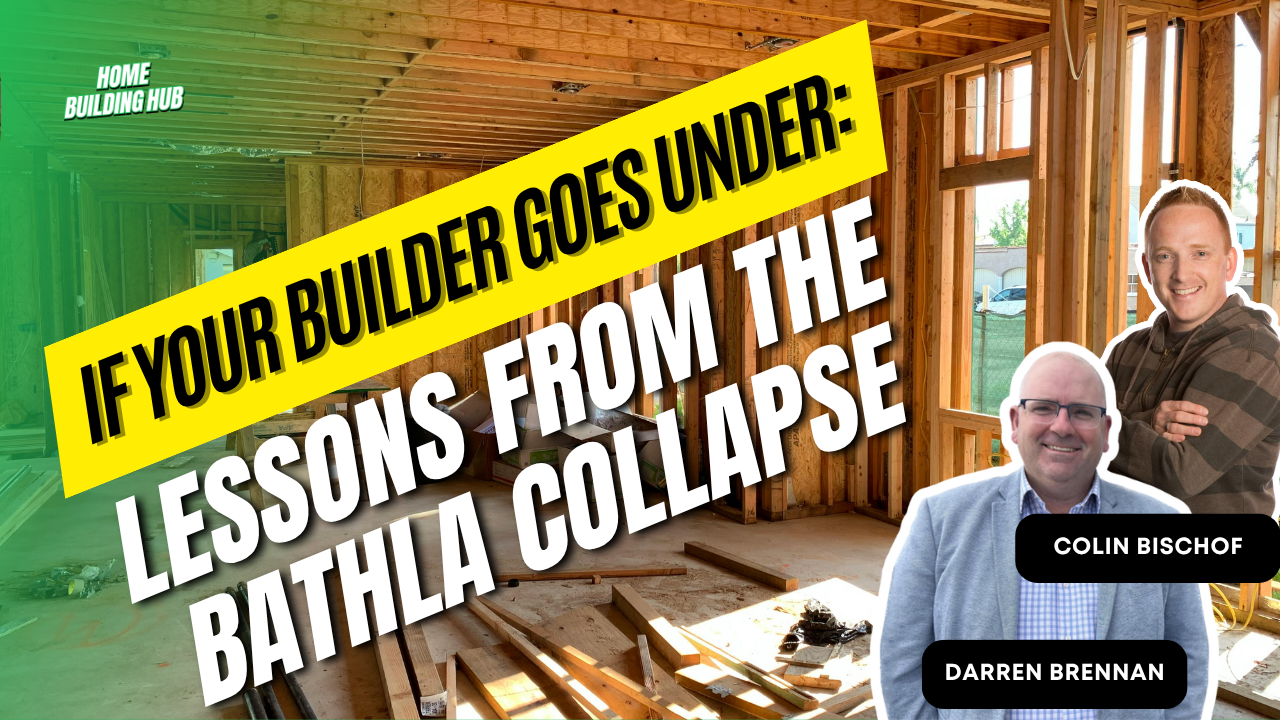

The collapse of Bathla Group has left thousands of buyers facing uncertainty and raises an important question for anyone building a home: what actually happens if your builder goes under? In this episode, we explain the critical differences between a developer collapse and a builder collapse, how Victoria's new Home Warranty scheme works, and the practical steps every homeowner can take to protect themselves.
Watch full episodeWant this as a printable?
We'll email you the full 10-step framework, formatted for printing and ready to take into your next site visit or quote meeting.
FAQs
5 supporting how-to guides
Long-form, step-by-step guides that go deeper on the topics most families want to get right on this build type.
- How modular home delivery works in South AustraliaA modular home arrives on a truck as one or more finished modules.
- Modular vs traditional new build: cost, timeline, and quality realityThe marketing claims for modular construction do not always match the reality.
- Site preparation for a modular home in AdelaideA modular home is only as good as the site it lands on.
- Financing a modular build (progress payments, staged approvals)Modular finance is meaningfully different to traditional construction finance.
- Council approval pathways for modular or prefab homes in SAModular homes need the same council approvals as any new build, plus additional permits for delivery.
Related BuildPilot guides
- Transportable Homes AdelaideComplete factory-built homes trucked to site - costs, pros and cons versus a traditional build.
- Adelaide House & Land PackagesComparing modular against a standard package? Browse live Adelaide house and land packages.
- Knockdown Rebuild AdelaideReplacing an existing home instead of building new: KDR costs, timeline and approvals.
- Complete Guide to Building in AdelaideThe full cornerstone guide for new home builds in Adelaide.
- Browse all BuildPilot guides
Found this useful? Make BuildPilot a preferred source so our guides show up more often in your Google feed.

We use cookies to improve your experience. Cookies on. Learn more